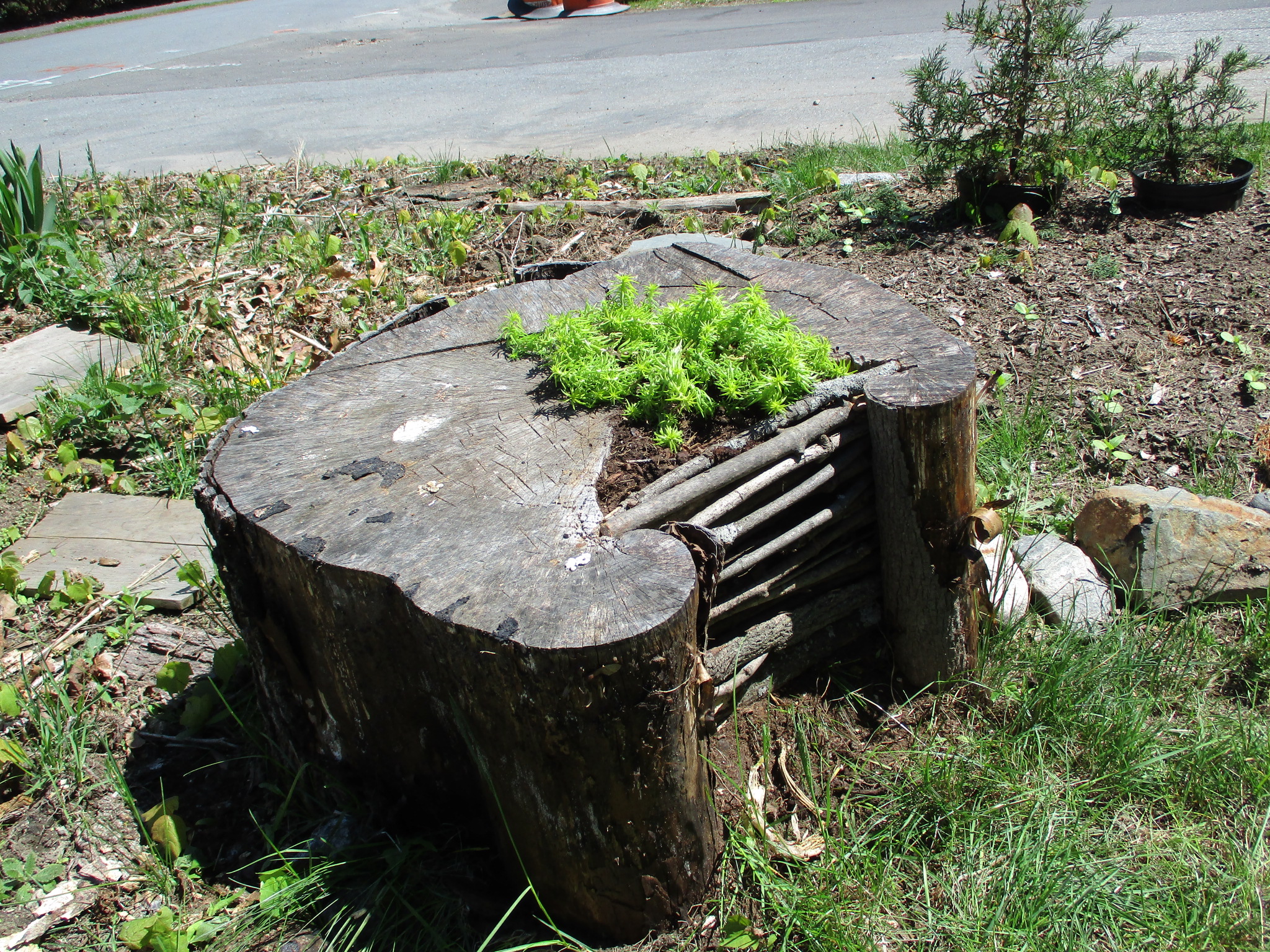

A rotten old tree-stump might be high-class living for the Common pillbug, but it could probably use some sprucing up before you invite over the in-laws. The good news is that if you’ve got rot in just the right place, you can turn it into a delightful addition to your garden.
Tools, Sticks, and a Stump
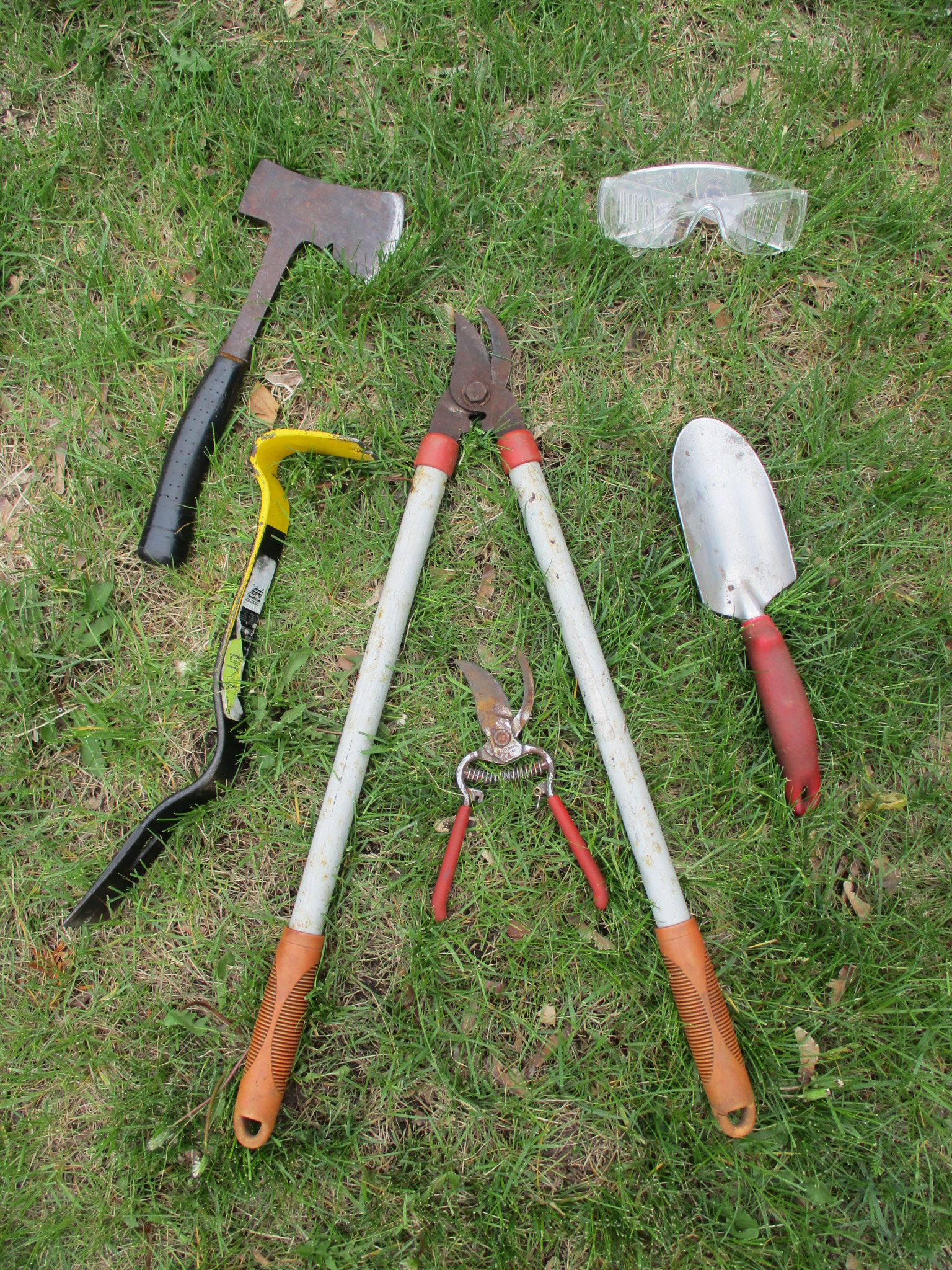
First you need the tools. You will need something that can cut accurately, plus some typical gardening gear. In my case I also used a small flat-bar to knock out the loose dry rot, and a hatchet to make the cuts.
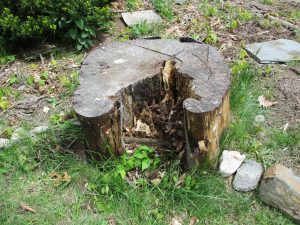
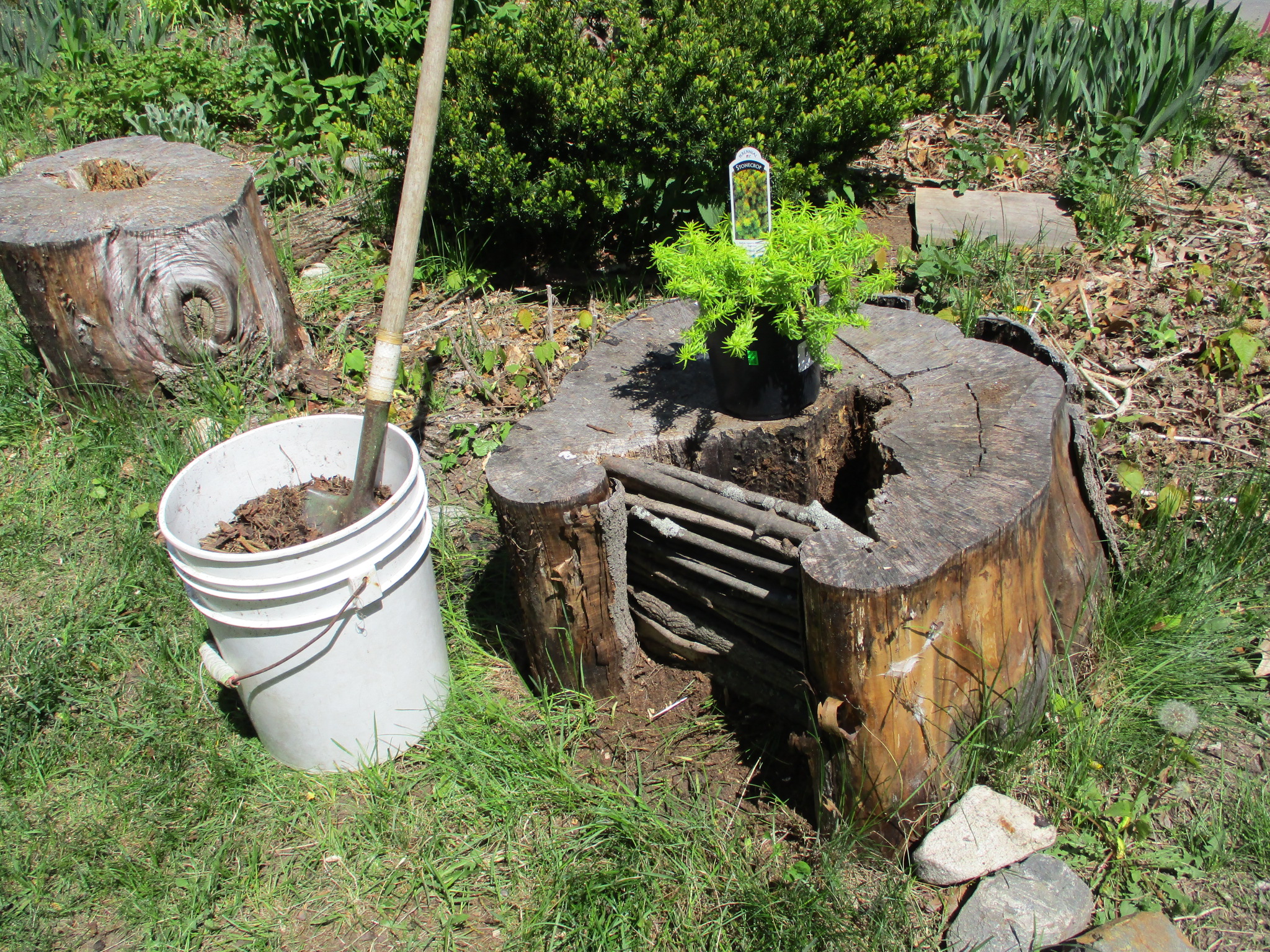
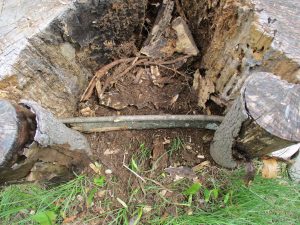
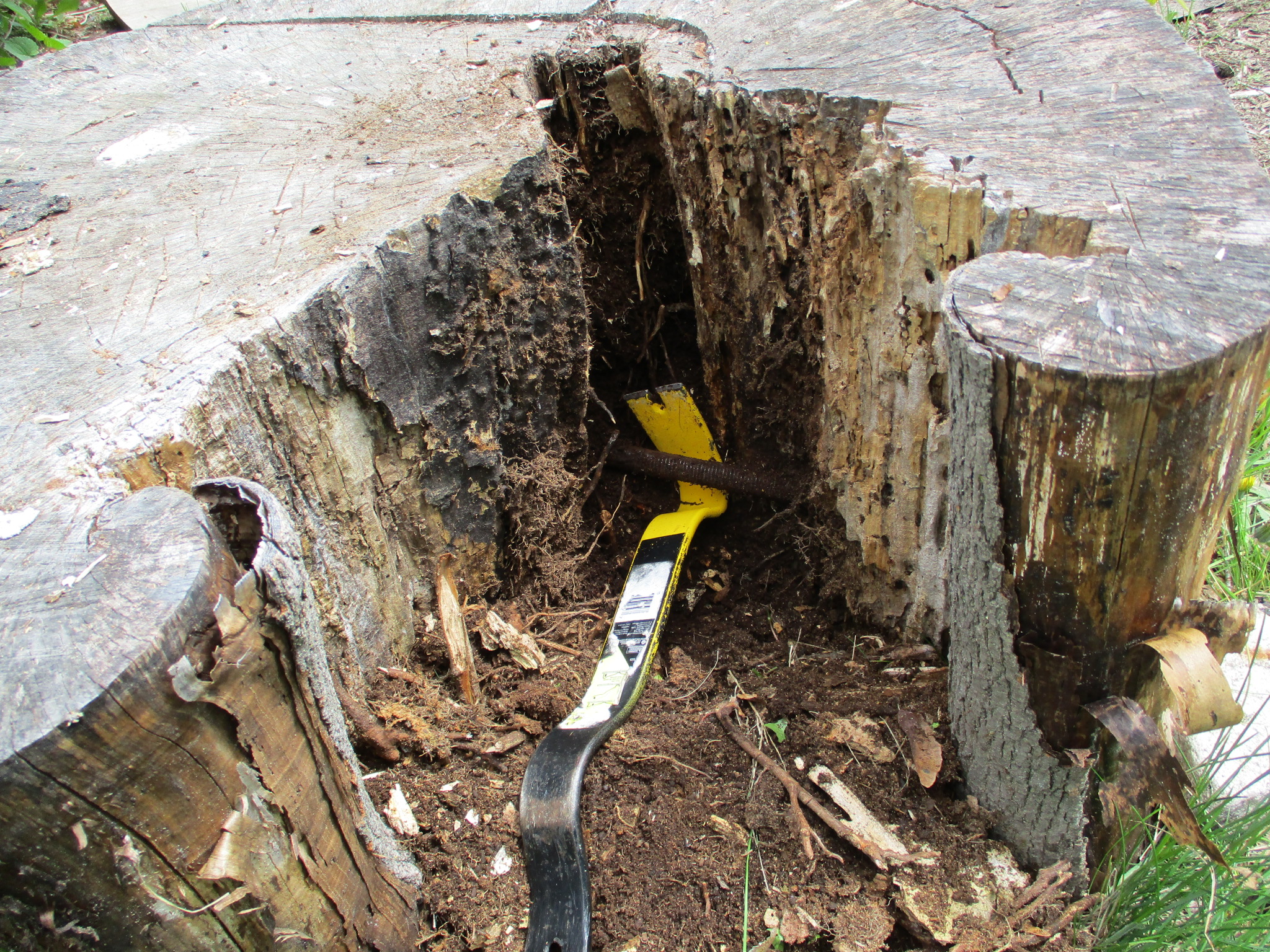 I was lucky enough to already have a pre-rotted stump in the shape of a “C.” The first step was to clear out the loose rot so I could eventually replace it with soil. I soon discovered why this particular stump was in such bad shape. Rumored long ago, this tree was struck by lightning. And buried inside was a long steel bolt which may have been an attempt at mending the tree. Unfortunately, that didn’t work out so well for the tree, but it did make a cavity of loose material that I easily cleared away with the flat bar.
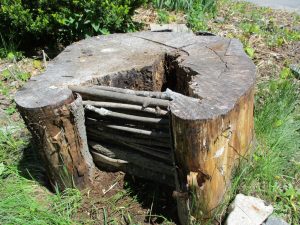
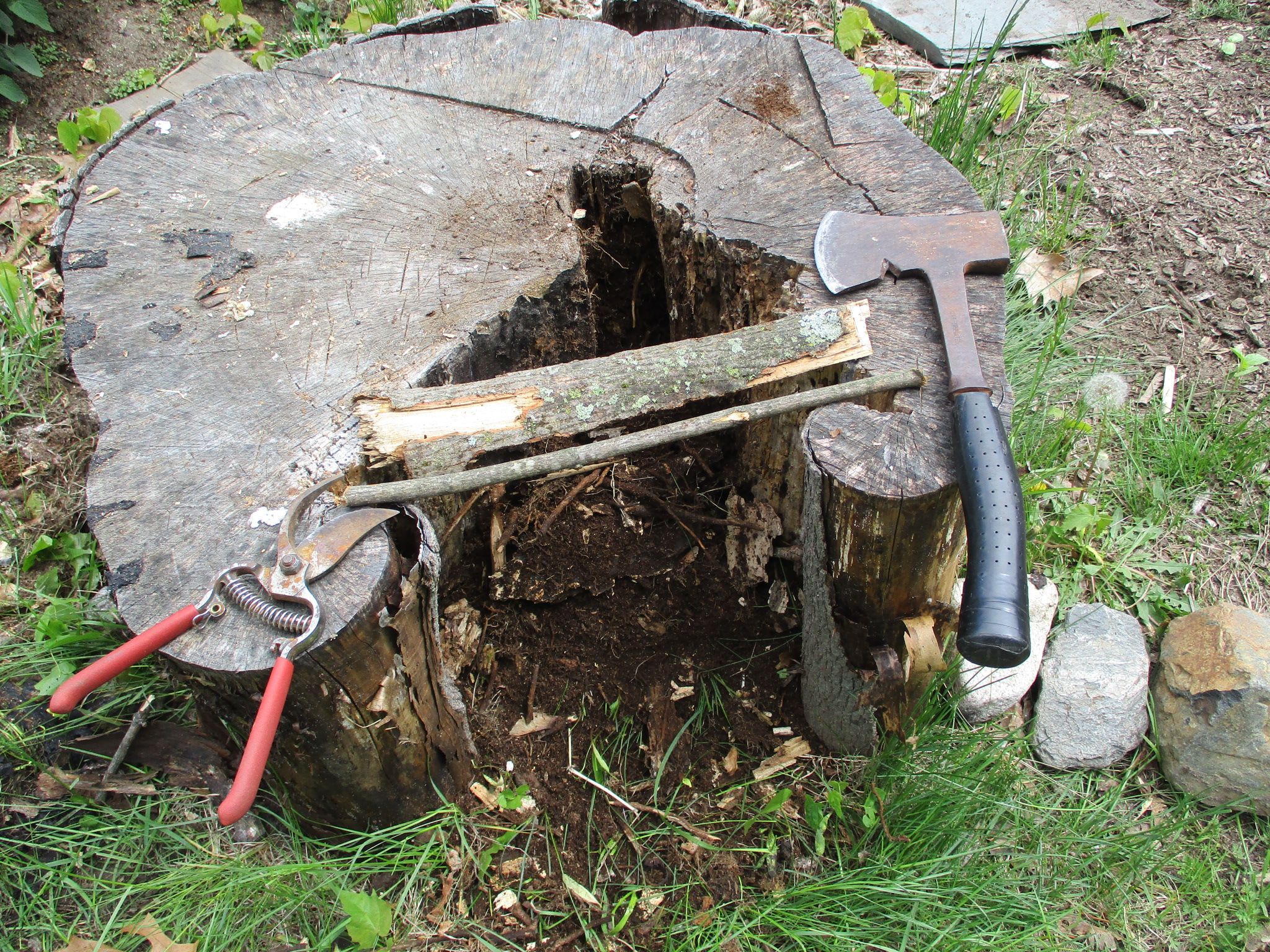 Next I had to lay in a stack of sticks that fit snugly into the crooks of the stump. I tried a few different thicknesses, and I found that sticks about the diameter of the average thumb worked well. It allowed me to build a sturdy wall. I started with a reference stick of just the right length, but it really became unnecessary after the first few.
I found the hatchet the most useful–and fun–because with just a few good whacks, I could trim and shape the sticks pretty quickly. If you try the hatchet method, be sure to keep your fingers clear and wear safety goggles! I had a close call but luckily no blood. Despite the danger, I built a the wall of sticks a bit thicker than necessary because, A) I had a lot of sticks, and B) I’m guessing this will make the planter a bit more durable, and C) maybe this will help retain moisture.
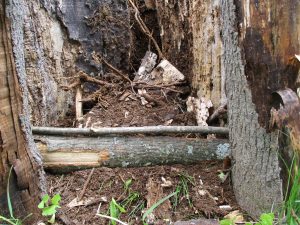
Periodically I would ask my assistant for more sticks. She was a bit coy at first but I bribed her with a cheese slice.

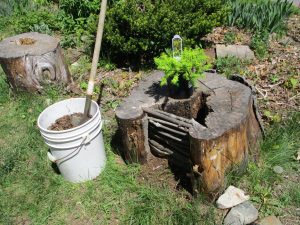 Once the wall was built up, it was simple to fill it with dirt and drop in a plant. I chose a variety of Sedum called ‘Angelina’, but nearly any type of “Stonecrop” would do. Unless you plan on doing a lot of watering, I would avoid annuals. Although they are far flashier than perennials, they are generally not as drought tolerant. The pretty ones usually don’t stand up to harsh living.
I have the chance to make a few more planters, and next time I may try Thistle, Hens & chicks, Phlox, Strawberry, or Mint. If I can get a planter that is large enough, I might also try a patch of Tulips or Queen Anne’s lace or Lily of the Valley.